How to Choose a High Flow Peristaltic Pump for Industrial Fluid TransferIn modern industrial fluid management, chemical processing, and automated dosing systems, maintaining precise volumetric output without risking cross-contamination is critical. When applications demand elevated transfer capacities—such as batch chemical dosing, large-scale water treatment, or heavy-duty food and beverage processing—standard low-capacity laboratory pumps fall short. This is where a specialized high flow peristaltic pump becomes an indispensable asset on the factory floor.
Unlike conventional positive displacement options where internal components constantly touch the working liquid, a peristaltic mechanism relies on rollers or shoes to compress a flexible hose, driving media forward entirely within a closed circuit. Navigating the market to find a unit that matches your operational volume and structural demands requires a clear understanding of sizing variables, mechanical attributes, and engineering standards.
What Defines a High Flow Peristaltic Pump?
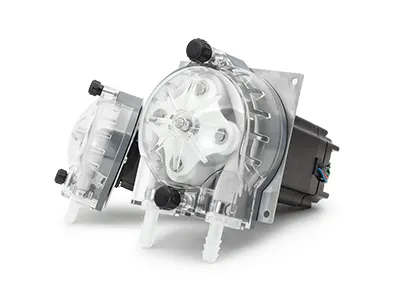
To properly evaluate fluid transfer solutions, it is essential to establish what separates a high-capacity unit from standard low-volume laboratory models. Generally, a high flow peristaltic pump is engineered to deliver volumetric outputs ranging from several hundred milliliters per minute up to several liters per minute (for instance, robust industrial configurations can scale from 600 ml/min past 4200 ml/min).
These systems are structurally optimized with larger rotor assemblies, broader occlusion tracks, and heavy-duty drive motors (such as powerful DC or high-torque stepper configurations) designed to operate continuously under demanding industrial loads. Despite their higher transfer capabilities, they retain the core advantage of traditional peristaltic systems: the fluid never touches any part of the pump mechanism aside from the interior of the replaceable tube, completely eliminating cross-contamination.
What Factors Affect the Flow Rate of a Peristaltic Pump?
The volumetric delivery of any pump is dictated by a combination of mechanical mechanics and fluid characteristics. When configuring a high flow peristaltic pump, several primary parameters govern overall performance:
Rotational Speed (RPM): The velocity of the rotor directly dictates how many fluid "bite" volumes are pushed through the system per minute. Higher RPMs increase flow, though they must be balanced against tube longevity.
Inner Diameter (ID) and Wall Thickness of the Tubing: Larger internal diameters allow a significantly greater volume of fluid to pass with each rotation cycle, making tube sizing the primary hardware determinant of flow capacity.
Fluid Viscosity and Back Pressure: Highly viscous liquids or systems working against significant discharge pressure can introduce slip or reduce the effective restitution of the elastic hose, affecting the actual delivered volume compared to baseline water tests.
When Do Industrial Systems Need a High Flow Peristaltic Pump?
Not every process requires maximum fluid transfer capacity. However, certain heavy-duty operational environments necessitate moving up to high-capacity volumetric configurations to ensure workflow continuity.
Industrial facilities typically deploy a high flow peristaltic pump in scenarios involving bulk chemical addition, rapid tank-to-tank transfer, or high-throughput automated filling operations. For instance, in wastewater treatment plants where liquid polymers or coagulants must be continuously dosed at elevated volumes, a high-capacity pump ensures the chemical reaction keeps pace with rapid water influx. Similarly, large-scale agricultural hydroponic nutrient delivery systems and commercial-grade food processing operations rely on these pumps to transfer thick or sanitary solutions reliably without exposing the fluid to mechanical shear or metallic contamination.
How Tubing and Pump Configuration Influence High-Performance Operations
Because the hose or tube acts as the single point of fluid containment and mechanical flexure, its composition directly influences the long-term reliability of a high flow peristaltic pump. Selecting the proper geometry and material ensures consistent output without premature mechanical fatigue.
To help evaluate how different specifications align with industrial demands, consider the performance parameters outlined below:
| Operational Parameter | Low-to-Medium Flow Units | High Flow Industrial Configurations |
|---|
| Typical Flow Range | 1 to 500 ml/min | 600 ml/min to 4200+ ml/min |
| Primary Motor Type | Compact 12V/24V DC | High-torque DC or Stepper Motor |
| Hose Wall Thickness | Thin-walled (low pressure) | Heavy-duty, thick-walled (high fatigue resistance) |
| Primary Application | Lab sampling, medical dosing | Bulk chemical transfer, industrial dosing |
Evaluating these structural distinctions ensures that the pump head and tubing matrix can handle sustained duty cycles without unexpected wall thinning or flow degradation.
How to Select the Right High Flow Peristaltic Pump for Your Equipment
Choosing the ideal hardware requires mapping your exact operational parameters against manufacturer specifications. Start by determining your required maximum and minimum flow rates, keeping a safety margin so the pump does not need to run at absolute 100% capacity continuously.
Next, examine the chemical compatibility between your fluid and prospective hose materials, such as silicone or specialty elastomers. Look for pump designs that feature tool-free or rapid-replacement mechanisms for the tubing, as this minimizes equipment downtime during scheduled maintenance routines. Finally, evaluate the control interface: determine whether you need a straightforward fixed-speed setup, an adjustable DC drive, or a precision stepper motor layout capable of automated system integration via external controllers.
At LEFOO, we engineer reliable fluid control solutions designed to withstand the rigorous demands of modern industrial environments. Our extensive lineup of precision dosing and transfer equipment—including versatile stepper motor and DC-driven configurations—focuses on structural robustness, simplified maintenance, and clean operation. You can explore our diverse product offerings and technical specifications by visiting our product catalog.
Conclusion
Investing in a high flow peristaltic pump is a strategic choice for industrial operators looking to optimize fluid transfer efficiency, safeguard process purity, and minimize maintenance headaches. By carefully analyzing flow rate requirements, matching tube and motor configurations, and prioritizing robust manufacturing standards, you can secure seamless long-term operation for your facility. If you are ready to identify the perfect fluid handling solution tailored to your specific application parameters, our engineering team is ready to help. Discover how our manufacturing expertise can support your systems by exploring our catalog or reaching out to contact our technical support team today.
FAQ
Why is tubing life shorter in a high flow peristaltic pump?
Higher flow rates typically involve larger rotors, faster speeds, or heavier tube compression cycles. This increases mechanical friction and flex fatigue on the hose walls, requiring regular preventive replacement schedules.
Can high flow peristaltic pumps handle abrasive slurries?
Yes, because the fluid stays entirely inside the tube, abrasive particles do not contact internal pump mechanics. However, you must select an abrasion-resistant hose material to ensure long service life.
What is the advantage of using a stepper motor for high-flow transfer?
Stepper motors provide exceptional control over rotational speed and volumetric accuracy, making them ideal for automated industrial dosing applications requiring repeatable, precise delivery volumes.
Do high-flow peristaltic pumps require priming?
Peristaltic pumps are inherently self-priming because the negative pressure generated by the tube restitution pulls fluid into the line, allowing them to lift liquids reliably from lower source reservoirs.
 English
  français
  Deutsch
  Español
  italiano
  русский
  português
  العربية
  Türkçe
  Zulu
Zulu